2. Fruit of the Spirit Series Introduction
Welcome to our study on the Fruit of the Spirit!
Our study over the next several months will be guided more or less by some studies collected in a book called Fruit of the Spirit: 48 Bible Studies for Individuals or Groups, by Phyllis J. LePeau, Jack Kuhatschek, Jacalyn Eyre, Stephen Eyre, and Peter Scazzero (2013, Zondervan Press). It's available as an e-book on Amazon.ca and I recommend you buy a copy -- BUT you do not have to have the book to participate in the study. I'll try to prepare us each week with one or more Bible readings and some questions to think about before class. Each of the fruit has several different lessons. We're also blessed to be able to draw on some resources put together by a sister in Christ, Rebecca Hodges Turner, who has been leading a similar class on the Fruit of the Spirit (and who I got this idea from) that Irene Schlarb and I have been participating in for the last few weeks. (Rebecca is a Christian counsellor in Washington State and a member of the Praise and Harmony singers. She is a member of the Bellevue church of Christ, which also sponsors Randy and Laura Campbell's mission work in Ecuador.)
The apostle Paul travelled teaching about Jesus Christ and establishing local congregations of believers in the southern part of the province of Galatia (in modern Turkey) while on his first missionary journey in approximately 47-48 AD. When we think about it, this was only 15 years or so after the death and resurrection of Jesus--so the new Christians were still learning much about living for Christ. There were both ethnically Jewish and non-Jewish followers of Jesus in the churches. Apparently, the non-Jewish Christians were starting to believe some other travelling teachers who were telling them that following Jesus was not enough to fully please God--they also had to keep the whole Law of Moses, including the dietary laws, holidays, and even circumcision for the men. Of course this teaching was completely in opposition to the idea that our salvation comes by the grace of God through Jesus's sacrifice of his life for our sins--and not on any works that we can do. This teaching steals the joy and freedom that believers should live in and ties us back to a system that the Jewish people could not follow perfectly and that will never work for us. We can never be "good enough" for God by trying to keep all the rules. God counts us as holy because the blood of sinless Jesus removes our sin, not just one time, but day by day.
Question for reflection: Have you ever felt like God couldn't love you or accept you because you weren't good enough? Is it hard to accept that Jesus loves you infinitely and not for good things you do? When Paul wrote in Philippians 3:8 that he counts all the things in his life as rubbish in comparison to knowing the love of Christ, what do you think he meant?
Paul wrote a very strong letter to the believers in Galatia to warn them against the influence of the false teachers and to encourage them to really live by the Spirit that God had placed within them when they came to Christ. In the letter, Paul shows that believers become righteous through the righteousness of Christ and that the freedom from sin that Christ gives us should lead to lives that depend on his Spirit living in us.
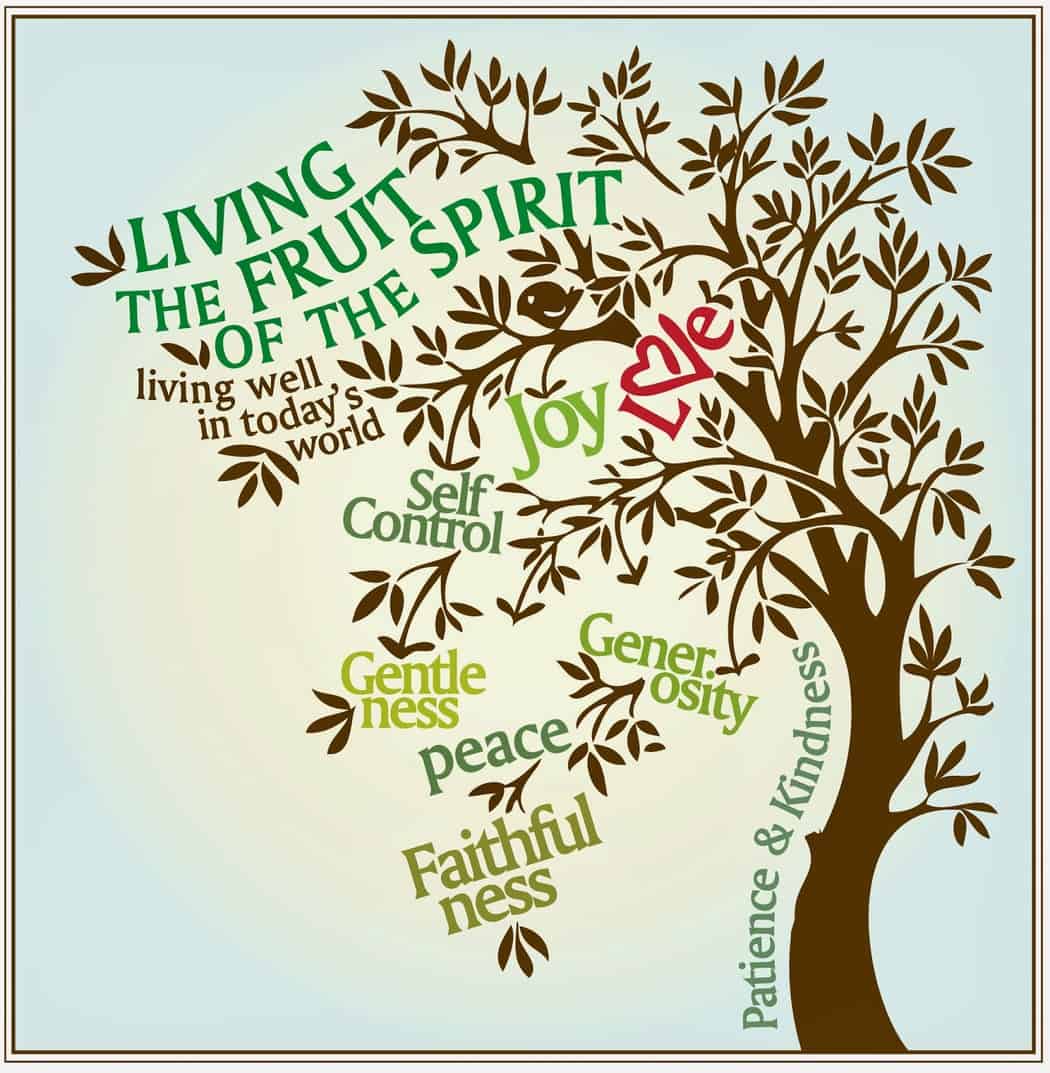
And what will the Spirit produce in our lives? ". . . love, joy, forbearance (patience), kindness, goodness, faithfulness, gentleness and self-control." Living in this way, we will experience the ongoing freedom of being children of God, and we will demonstrate the love of Christ to the world. We are not slaves to sin or slaves to a religion of needing to be "good enough" or "earning" our salvation. We live daily by the Spirit that God has given us, trusting in the promises of God.
Every true Christian wants to have these character traits in their life, but they are just as difficult to develop today as when Paul wrote to the believers in Galatia. We struggle to achieve them on our own, but if we walk with the Spirit, we are promised that this fruit will grow in us. Now a plant doesn't produce fruit immediately from the time the seed is put in the ground, and I'm convinced that it takes time for the Spirit to feed, water, and prune our hearts so that the fruit (character) can develop. The more time we spend letting the indwelling Spirit do his work through the Word of God, the more growth we should see.
"Many of the behaviors and attitudes of the Christian life do NOT come easily to us. We have to give up some selfish behaviors and thoughts and attitudes that we really like holding on to. And that can be a painful process, to give up those parts of ourselves. Just like weeds that choke out the things we grow in our gardens, behavioral weeds get in the way of the fruit of the spirit developing – weeds like anger, and envy, and hatred, and impatience, and all that." (Rebecca Hodges Turner)


Comments
Post a Comment